Showing posts with label Science. Show all posts

Wednesday, 28 October 2020

Why Public Science Engagement?

This is my input to the Engagival contest launched by Falling Walls. Please read over and let me know what you think!

Speaking at the National Science & Maths Quiz in 2016

We all agree that the knowledge gained from science is power. Indeed science can be a transformational tool when its findings are applied for the greater good. This is often not the case in many parts of the world. It is certainly not always the case in any country. Some times the best evidence does not always inform decision making. A case in point is how the COVID-19 pandemic was handled by some governments. Beyond this, there appeared to be gaps in communication in many countries, especially in terms of how some interventions were arrived at, in the early stages of the pandemic. And let's not forget about challenges with dealing with the climate crisis!

How can scientists and those in charge best exchange information with the community? When engagement is done right, societies access valid knowledge for everyday decision making, and scientists and policymakers better understand the contexts of their lived experience. This means better policies and programmes.

I am concerned about the disparities in access to information among people of different backgrounds - between those in the so-called developed world and the rest of us in the emerging economies, between people in urban and those in rural areas in all countries, and between people of high socio-economic status and those of low socio-economic status in cities. Clearly, the knowledge gap is not only a geographic gap, but an economic gap too. It is an education gap. It is a health gap. It is an aspiration gap. 

Engaging different audiences with science means that we have an opportunity to change the culture. I imagine science embedded in the everyday life of communities would lead to many positive changes for the people. They will learn. They will make better choices. They will solve problems. They will harness opportunties. They will engage the powers that be on stronger terms. This changes the game as the gaps between research, policy, and practice will be closed. The walls to enable science for development will be brought down. This is why I engage.


#WhyWeEngage


Tuesday, 26 June 2018

Africa Science Week Research and Innovation Showcase 2018 - Call for Applications


Ghana will be hosting her first Africa Science Week (ASW) in September 2018. ASW is an initiative of the Next Einstein Forum (NEF) aimed at engaging members of the general public with scientific information and activities. This will enable them to appreciate the importance of science, technology, engineering, and mathematics (STEM) as part of everyday life.

2017-2019 NEF Ambassador Peter Asare Nuamah is leading this effort with support from AIMS Ghana, Ghana Science Association and other stakeholders in the Ghanaian STEM space. The theme for Ghana is 'Accelerating Growth and Development through STEM'. Series of activities are being planned for ASW Ghana 2018 including:
  • Conversations in mainstream and social media on the importance of STEM to national development
  • A National STEM Forum/Conference to project local science and make a case for greater investments into STEM
  • Field Visits by Basic School Pupils to the Ghana Planetarium and other interesting locations
During Africa Science Week, the relevance of science and technology for national development would be brought to the fore. We would hear from leading Ghanaian and African scientists and innovators including AIMS Ghana President Mrs Lucy Quist and Ghana's first Next Einstein Forum Fellow, Dr Aku Kwamie.


As part of the festivities, scientists, storytellers, and other innovators would be given the opportunity to showcase their work through a special Research and Innovation Showcase segment. Successful applicants would be given the platform to present to a live audience including policymakers, academics, business leaders, and potential funders. They would receive extensive publicity through both mainstream and social media, reaching audiences across Africa and beyond.

Applications are welcome from any STEAM (Science, Technology, Engineering, Arts, and Mathematics) field, including the humanities. If you're interested in being one of the featured scientists and innovators during ASW Ghana 2018, kindly fill this form.

Sunday, 26 March 2017

NASA Scientist Dr Trebi-Ollenu Addresses Ghana Academy of Sciences on the Importance of Space Technology

Ghana's Dr Ashitey Trebi-Ollennu from NASA-JPL will be presenting a lecture at the Ghana Academy of Arts and Sciences on the topic “Space Technology Unleashing A Wave of Disruptive New Technologies – To Post-Scarcity Economy”. Going by this title, the lecture promises to unveil deep insights that would be relevant to young people, businesses and policy makers.
The lecture will focus on current and future trends in information technology, explain the exponential growth in technology and present ways that the youth of Ghana can participate in this life-changing disruptive technologies — self-driving cars, genetic editing and artificial intelligence.

Dr Trebi-Ollenu would also address the difficult challenges facing governments today. Special emphasis would be placed on how to enable and channel the 'transformative forces of technological innovation' to maximize the benefits to current and future generations. Suggestions would be made as to how governments can reform institutional structures to be a lot more open to self-disruption as relative power shifts from centralized forces to the unprecedented empowerment of individuals due to the exponential growth of information enabled technologies.

It is refreshing that Dr Trebi-Ollenu is championing this critical discourse at this particular point in time. Advances in modern technology is gradually lowering barriers to entry in various spheres of science and technology research and innovation. This empowers individuals, small organisations, and communities to be able to access tools to be able to solve everyday problems and create businesses, resulting in significant socio-economic gains across board. 

Thursday, 5 January 2017

Join the Next Einstein Fellows Programme and Help Promote Science in Africa


One of the communities I enjoy being part of is the Next Einstein forum (NEF), which is a movement to grow science and technology for development in Africa. I'd written previously about being a NEF Ambassador, my experiences at the inaugural Global Gathering, and a collaborative fundraising drive we were executing.

NEF is currently accepting applications for its next cohort of fellows! NEF Fellows are high achieving young scientists and technologists who're passionate about using their knowledge and skills to solve African and global problems. If you're African, have a PhD in any discipline, have a great research/innovation track record, and have the desire to promote #ScienceInAfrica this is perfect for you!

At the next Global Gathering scheduled for Kigali, Rwanda in 2018, you'd have the opportunity to present your work and ideas in a TED-style format to a global audience. You'd also have awesome opportunities to grow your career through engagement with Noble scientists, Fields Medal winners, government leaders, and captains of business.

Basic requirements for this opportunity are listed in the flyer below. More information can be found at http://nef.org/fellows.


We don't have a Fellow from Ghana. As Ghana's NEF Ambassador, I'm particularly keen to see young Ghanaian scientists featured in the next class of fellows. I believe we can match the quality required. But that can only happen with the first step - applying for the fellowship! Please share with friends who may be qualified and interested.


Monday, 28 November 2016

Raise Public Understanding of Science in Africa


As you may know, I have been involved with the Next Einstein Forum and have been working to help promote science in Africa and inspire the next generation of African scientists and innovators. For the past few weeks, I and colleague Ambassadors from other African countries have been leading a crowdfunding campaign on Fiat Physica. We are inviting you to join us in our efforts to increase public understanding of science to advance development in Africa. 

We feel that low public interest in science is slowing down Africa's development. While some scientists are able to undertake useful research on the continent, public skepticism makes it difficult for their discoveries to move from the lab to the community. Our youth stand at a disadvantage if they are not empowered with adequate skills and knowledge to reverse the status quo.

With our campaign, we want to draw attention to scientific advances in our countries by creating platforms through which scientists engage with the public.Our goal is to demystify science so that it becomes a bigger part of the cultural fibre of African societies.

We need YOU to join us in our effort by raising $8650 to help support the Public Understanding of Science for Development (#Sci4D) project.

Help us to connect Africa's scientists to the community and advance progress on the continent. Support us as we work toward changing mindsets and building a community of public engagement with science. Thank you!

Please take a minute to check out the full suite of NEF Ambassadors crowdfunding campaigns.

Monday, 21 March 2016

NEF Ambassadors Share on Expectations and Experiences - #NEF2016

The Next Einstein Forum, hosted by Senegal in Dakar, brought together various stakeholders including presidents, scientists,technologists, policymakers, entrepreneurs and activists to deliberate on the future of African science and how it can be applied to benefit society. During the global gathering held from 8th to 10th March, some NEF ambassadors took time to share on their expectations and experiences. Find out more in the video below.


Also, fellow ambassador Yassine Harzallah from Tunisia made a brilliant video that captured how the ambassadors interacted with the event. His video evoked the sense of friendship, cooperation, happiness and positivity that pervaded the NEF ambience. 


We look forward to support the work of NEF in order to raise the profile of African science and encourage more young Africans to enter into the sciences. We are all keen to work with the fellows, volunteers, and mentors within the NEF network, as well as colleagues in our own countries and all over the world, to realise the above objectives.

Wednesday, 9 March 2016

NEF Chronicles: Arrival in Dakar, Senegal

Last time, I blogged about the Next Einstein Forum and it's drive to promote STEM in Africa. One of the most important aspects of the initiative is the Ambassador programme, which I happen to be part of. Yesterday, I arrived in Dakar, the capital of Senegal yesterday, to begin my NEF experience. The main event, dubbed Global Gathering, is slated for 8th to 10th March 2016. This blog summarises my NEF experience so far.

Journey to Dakar
I got to Kotoka International Airport in Accra at around 8:40 am, checked in and took a one hour flight to Abidjan. From Abidjan I transferred to another flight to Dakar which lasted 2 hours 45 minutes. I was so amazed by the duration of the journey; it made me realise that West Africa was much bigger than I imagined. Immigration and security procedures at all airports were pretty smooth and efficient. NEF volunteers were on hand to wish all arrivals a warm welcome to Senegal, promising us a time of our lives. We were then transported to our hotels by bus. In the bus to the hotel I met my room mate from Guinea Bissau. Our interactions revealed why we were paired together: we have international development, education, and civic participation in common. Throughout the ride I couldn't help but notice how Dakar was different from Ghana's capital Accra: there was little traffic, hardly any street vendors, cleaner streets, and the buildings had this stylistic essence.

Orientation/briefing with NEF
After checking in to the hotel and getting acquainted with our room, we stepped out to explore our surroundings. In the hotel lobby, we met the NEF Ambassador from Gambia who is also one of the cluster leaders. He used his Wolof skills to help navigate our way into town to get some food. Back from our outing, we had a brief meeting with NEF content lead Janny who oriented us on activities lined up for ambassadors and provided us with all we need for a successful stay in Senegal. I had a taste of Senegalese bissap a.k.a sobolo and it was good!
Day 1 in Senegal ended really well. I already like the city of Dakar. The vibe around the NEF is infectious, and I'm bracing myself for an experience of a lifetime. On y vas!

Thursday, 4 February 2016

Promoting African Science Through the Next Einstein Forum - #NEF2016

I am delighted to be named among the first cohort of Next Einstein Forum Science Ambassadors. According to NEF.org, "the Next Einstein Forum (NEF) is a platform that brings together leading thinkers in science, policy, industry and civil society in Africa to leverage science to solve global challenges." Believing that the next Einstein will be African, NEF works to make Africa a global hub for science and technology. It is an initiative of the African Institute for Mathematical Sciences (AIMS) and the Robert Bosch Stiftung.
The Ambassadors scheme aims "to build a targeted team of 54 young Ambassadors, one from each African country, to participate in the NEF Global Gathering 2016, champion African science, technology, engineering and mathematics [STEM] globally and become part of the growing NEF community."
 As a NEF Ambassador, I would among other things:
  1. Represent Ghana at the NEF Global Gathering event in Dakar, Senegal, the first of its kind in Africa. We would celebrate African science, including the work of the elite NEF Fellows, and showcase how to apply scientific knowledge to sustainable development in Africa. 
  2. Promote Ghanaian STEM stories, research, and innovations to the global audience. For example, my inaugural post on NEF.org highlighted pressing environmental issues in Ghana, and how various actors are working to resolve the challenges. In the future, I plan to share more on social innovation projects and research of the STEM community in Ghana
  3. Promote the Next Einstein Forum's work in Ghana and contribute to the growth of an all-inclusive community for science, technology, and development in Africa. I plan to share NEF news with my online networks, such as Global Lab Ghana, join STEM projects, and participate in relevant events and conferences here in Ghana
The NEF fellows embody African scientific excellence, inspiring the next generation of African scientists
Check out some of the ideas I shared during the application round in the YouTube video below:


In addition to the above, my hope is to network effectively with colleague ambassadors, the NEF Fellows, and other participants, creating opportunities for future collaborations. I am truly excited to be part of this pan-African initiative. Find out more about the awesome current NEF Ambassadors here and here.

What issues would you suggest to be on top of NEF's agenda? Are there any researchers or innovators whose work excite you that you think could use some visibility? I would be keen to hear your ideas as to how best to represent Ghana and Africa to the global audience. Follow the conversation via @NextEinsteinFor and @gamelmag on Twitter. Also get the latest updates via #NEF2016 and #AfricasEinsteins on social media.

Monday, 25 January 2016

Science BarCamp Ghana Examines Scientific Solutions for Economic Progress


Science BarCamp logo
Scientific developments in a country or society cannot proceed without a nurturing community, a collection of critical thinkers and willing actors. These people are usually buoyed by curiosity, to understand the underlying mechanisms of natural phenomena, and creativity, to devise solutions to day-to-day challenges humanity faces. Ghana’s first Science BarCamp, held last Saturday 9th January, witnessed a collection of such passionate thinker-doers at the National ICT and Science Resource Centre, Accra. The programme was put together by GhScientific, in partnership with GhanaThink Foundation, and supported by Novan Education and Training. The theme, “scientific solutions for economic progress”, could not be timelier, with the country facing challenges in energy, youth employment, sanitation, and public services. “What’s a barcamp?” you may ask. A barcarmp is a participatory ‘unconference’ where the programme and content are user-generated. Unlike your typical conference, everyone is encouraged to be a speaker and a member of the audience at the same time. Featuring various interactive formats, the programme seeks to engage all participants to learn and share in an open environment. GhanaThink has been spearheading barcamps, as a youth social changemaking movement, in Ghana since 2008. Science BarCamp remixed GhanaThink’s barcamp format, including science demo sessions, and an engaging panel discussion focused on issues affecting science in Ghana. The event brought together established scientists, professionals, young researchers, students, and general science enthusiasts. I was delighted to be the MC for the day.

Science mentors, L to R: Cordie, Gloria, Delali, Sam B, and Sam AF, introduce themselves. Credit: GhScientific 
After a round of self-introductions, the programme started with a panel discussion moderated by Larisa Bowen-Dodoo of Servled Africa. The discussants were Dr Kwamena Sagoe (Ghana Science Association), Dr Elsie Effah Kaufmann (University of Ghana), Mr Anis Haffar (GATE Institute), and Dr Patrick Arthur (University of Ghana). The discussion explored various facets of the theme, addressing issues such as quality of science education, motivation for science careers, and how to make science more marketable in Ghana. Their insights were complimented by contributions from a well-engaged audience. A very interesting discussion point was the role of the educational system (including teachers) in sustaining student’s interest in science. While many held that it was incumbent on schools to provide the needed stimulation and motivation, a few others were of the view that science, being a difficult field of endeavour, requires students’ own initiative and dogged determination to overcome inevitable challenges, irrespective of the environment. Various viewpoints covered the environment-initiative spectrum.

Dr Elsie Effah Kaufmann strongly advocated for student initiative as a key ingredient in learning science
Next, attendees had one-on-one mentoring sessions with invited scientists and industry professionals. The mentors were Dr Gloria Ivy Mensah (Women in Biomedicine Africa), Kobby Blay (GhanaHealthNest), Alain Gbeasor (Gesus Group), Jorge Appiah (Creativity Group), Delali Otchi (Hydra Group), Sam Bhattacharyya (dot Learn), Tunde Alawode (dot Learn), Dr Patrick Arthur (Department of Biochemistry, University of Ghana), Cordie Aziz (Environment360), and Samuel Amoako-Frimpong (University of Energy and Natural Resources). The mentors shared perspectives on their areas of expertise including biomedical research, health communication, industrial chemicals, education, engineering, technology, and environmental sustainability. They gave guidelines on how to proceed on a science career path and practicalising scientific ideas. The group then broke for lunch during which there was a bit of unstructured mingling.

After lunch, Dr Thomas Tagoe, co-founder of GhScientific, led demos and fun games, which were very exciting. Samuel Amoako-Frimpong presented on virtual reality and how it can be applied in education. We also enjoyed #PipetteWars, a game testing the speed and accuracy of players to fill a white tile with water. Dr Arthur ultimately showed his pipetting prowess honed by many hours in biochemistry labs.

Dr Arthur faces off with Freda during finals of #PipetteWars
Four breakout sessions were organised to explore issues of interest to the participants. The areas selected were inspired by the contributions made during the panel discussion. The topics discussed were:
  • Moving from scientific ideas to large-scale solutions, led by Freda Yawson (Innovate Ghana)
  • Making science education interesting and appealing ,led by Saddiq Mohammed (Ghana Association of Science Teachers)
  • Engaging communities with science, led by Billy James Dega (National Society for Black Engineers)
  • Applications of virtual reality, led by Samuel Amoako-Frimpong (UENR)
Volunteers from each session summarised their discussion points for the plenary. As part of the closing remarks, the organisers mentioned various STEM projects and groups participants could engage with going forward.

Breakout sessions ongoing at SciBarCamp
Science BarCamp created a rare networking opportunity for both young scientists and their older counterparts. The event was highly interactive and all—round participation was fantastic. Science BarCamp created an intimate atmosphere for kindred spirits to discuss science, its possibilities, and the way forward for Ghana. I found conversations around learning, the environment, biotechnology, science business, and technology invigorating. This type of engagement is often missing in Ghana. Therefore GhScientific and partners must be applauded for their bold efforts in making science mainstream. There are already calls for Science BarCamp to be taken to other regions of Ghana. It would take the support of everyone who cares about Ghana’s future to make this possible.

Photo moment with cross-section of participants after programme. Credit GhScientific
What to know more about Science BarCamp? Check out this collection of photos on ghscientific.com, and follow #SciCampGH and #SciBarCamp across social media.

Sunday, 23 August 2015

Innovating with Science and Technology at Accra Science Hack Day


The first ever Accra Science Hack Day, held at iSpace in Osu on 15th and 16th August 2015, brought together students, hobbyists, technologists and science enthusiasts from different parts of Ghana. They worked individually or in teams on interesting projects, either tackling a key societal problem or just having fun with science. It was an interesting learning experience for me, even though I participated as one of the facilitators, alongside Kobe Subramaniam, Anisha Tailor and Myf Owen (from Lab_13 Ghana), and Thomas Tagoe (GH Scientific).

I was very glad to see Junior Camp Internship Programme trainee Maame Yaa Serwaa expertly manage the registration desk and provide on-site support to iSpace Community Manager, Akua Baning. Akua ensured that all aspects of the event went on smoothly.

We were welcomed to the event by JCIP & iSpace intern Maame Yaa
Most of the hackers took a bit of time to arrive at iSpace at the advertised time on Day 1, which appeared to be a slow Saturday, but when they walked in their focus and level of engagement was consistent throughout the period of the programme. I spotted a few former students of mine from my Ketasco days. Lab_13 Ghana had also registered two of the beneficiaries of their hands-on science sessions, Samuel Darko and Perkins Frimpong. The two 14-year olds are pupils of Solid Hope Basic School in the Bosumtwe District.

Kobe and I gave quick five minute lightening talks, after a brief welcome speech by Akua. I touched on citizen science as a tool for research and civic participation. I explained how the research, technology, and civic communities can come together to address challenges such as power cuts, pollution, and transport in Accra. Kobe's presentation was on innovating with micro-controller systems such as Arduino and Rapberry Pi. He used examples from Ghana and elsewhere to illustrate the ubiquity of these systems in an increasingly technological world.


The teams soon got down to business for the rest of Day 1 and most of Day 2.

Team Dumsor Automate developing their idea on Day 1
At the end of Day 2, six teams made presentations:
  1. Smart Borla: a refuse collection beam that sends signals to the collecting company when it is full
  2. QBay: uses augmented reality to engage and enhance the learning experience for students.
  3. Dumsor Automate: a system that enables remote control of electric gadget especially during power cuts
  4. SP Backpack: solar-powered backpack that enables charging of mobile devices on-the-go
  5. Secnet: a suite of online security tools
  6. Gospel Scientist: explaining biblical principles using scientific demos
  7. Linkages: an art piece depicting connections (visualise spider web) through the woldwide web.
The judges, Fiifi Baidoo (iSpace), Kobe, and Tom had the unenviable task of picking out the winners from the pack.

Before the results were announced, Tom spoke on a new Wellcome Trust funded initiative we've been cooking up for quite some time now called SHAPE (Shaping Healthy Attitudes and Protecting the Environment). This project, led by GH Scientific, is aimed at engaging Junior High School students to analyse and design solutions to environmental health challenges in Accra.

Back to the main proceedings. Everyone was excited to learn how the teams placed at the end of two days of ideation and prototyping. The third position went to Dumsor Automate, the second to Q-Bay, and quite remarkably, SP Backpack from Lab_13 Ghana placed first! The boys, who earlier won the Boatastic boat-making competition (Titanic 2015), scientists-in-residence, and everyone associated with Lab_13 were over the moon. The win validates the idea of giving learners space to experiment and discover things for themselves.

Celebrating Samuel and Perkins Credit: Lighyer Foundation Facebook page
Overall, the event (#AccraScienceHackDay) was a great one and has the potential to become a mainstay on the Ghanaian tech circuit. Its hands-on nature challenges participants to move away from just talking about problems, and fantasising about possibilities, to actually building stuff, test and receive feedback. Going forward, I would like to see earnest efforts made to sustain the various projects started. Additionally, it'd be really cool to expand the event geographically, so other regions in Ghana will benefit. Hopefully, future events will see more innovations from fields aside electronics. There is huge potential for bio-hacking and data analytics projects in our context.

Huge thanks to iSpace for bringing such a truly remarkable event to Ghana. Commendations also go to Science Hack Day, the global organisers, and EndNote for their sponsorship.

If you were to participate in a Science Hack Day event, what project would you work on?

Monday, 24 November 2014

Making Science Education More Practical in Ghana, The PEN-GAST Experience

Brainstorming session ongoing at a recent science workshop in Accra
Science is commonly viewed as a process of obtaining knowledge through experimentation and observation. This means that scientific knowledge is generated through extensive interaction of learners with the physical and natural world. It appears that the role of the teacher, therefore, is to provide students with the requisite tools to embark on this journey of discovery, filled with adventure, curiosity and wonder. Once interest is stimulated and maintained, the rest is history.
Yet in Ghana, especially at the basic school level, lack of basic laboratory materials and equipment interfere with the ideal of teaching science using a hands-on approach. Without proper practicals or demos, students find it more challenging to understand topics taught in class. This may partly be responsible for the general poor performance of basic school pupils in their end-of-studies examinations.

Thankfully, the above situation may soon be in the past as the educational paradigm shifts towards more engaging instructional approaches. One such proposition is low-cost science practicals, designed and run using very cheap readily available resources. A recent workshop jointly organised by the Greater Accra branch of the Ghana Association of Science Teachers (GAST) and Practical Education Network (PEN) introduced district science coordinators and some selected basic school science teachers to some of these activities.

Indicator being extracted from some flowers

The workshop was facilitated by Heather Beem of PEN and MIT D-Lab, while Saddik Mohammed and colleagues from GAST coordinated the logistics. Thomas Tagoe, Habib Sumaila, and myself played various supporting roles over the three days. The workshop covered basic science activities for selected topics in the Junior High School (JHS) curriculum. Apart from performing pre-set experiments, Heather introduced a framework useful for designing new science activities, and solving problems in general. This was well-received and tested by the educators. Feedback from the participants, the facilitator, and the organisers was positive. The science coordinators promised to transfer their experiences to the teachers in their districts through follow-up workshops. The workshop blog and GH Scientific covered details of what transpired.

Heather explaining the design cycle

All in all, being part of the PEN-GAST workshop was a useful experience as I learnt some cool science tricks I would be likely to try out some time. More importantly, I connected with many people influencing science education at the basic level in Ghana, namely science coordinators and teachers. We discussed how some of their own projects fit into initiatives such as Global Lab Ghana, Ghana Educators Network and GH Scientific. There are many opportunities for further collaborations! Finally, I shared some online tools, communities and resources that could be useful for their future learning and work.

Learning science should not only involve memorisation and reasoning, but also performing activities and developing skills. The PEN-GAST workshop demonstrated that cost cannot always inhibit science in action. Teachers can take advantage common low-cost materials to give school science a new twist. This will go a long way to contribute to raising competent innovators and problem solvers of the future.

What are your personal experiences learning science? In what ways can teachers make studying science more fun and engaging? Views welcome!

Wednesday, 29 October 2014

BarCamp Ho and the Quest for Scientific and Entrepreneurial Thinking in Ghana #bcho

Mentoring session ongoing at BarCamp Ho 2014
Last Saturday, 25th October, I joined other change makers at the University of Health and Allied Sciences for the fourth BarCamp Ho. This was my first barcamp in over a year, so I was really excited to have been part of the event. Here are Storify highlights of what transpired. 


After an initial hesitation, I accepted to 'mentor' some attendees (many of them university or senior high school students) on "education and research", drawing on experiences in science education and postgraduate studies. Upon reflection, since many of the attendees asked the same questions, perhaps, a breakout session on the topic would have been more appropriate. Also, it would have been nice to pick everyone's brain on what can be done to improve the quality of research in Ghana, and to increase its role in policy making. This is very important since science provides tools to fix our day-to-day challenges. A more robust research regime in West Africa would see regional challenges such as ebola, small arms, and energy shortage, handled with greater efficiency than is currently done.

The above submission ties in well with the overall theme of this year's BarCamp Ho: "re-educating ourselves for the new entrepreneurial world", although not immediately apparent. Most of the day's discussions centred on creating business ventures and new instructional/coaching models to raise entrepreneurial champions. While these propositions are rightly in place, it is equally important to extend our conception of entrepreneurial thought to disrupting education and advancing scientific research. Innovation on these frontiers do not only require increased scientific knowledge but also technical aptitude to analyse society's problems and to design and implement solutions to tackle them. Clearly, there is an urgent need to liaise with government, businesses, and the larger society to adopt research as a critical tool for development. The achievement of this feat requires entrepreneurial acumen on a scale similar to what pertains in the business context. Our long-term challenge, therefore, is to create educational opportunities that would enhance the inculcation of critical skills among learners at various educational levels. In the short-term, government must invest more in science education and research. The current situation where less than 0.5% of GDP is allocated to science and technology in Ghana is not only shocking but shameful.
Re-educating ourselves for the new entrepreneurial world requires raising leaders in politics, business and communication, to create revenue-generating projects and to position our country in a favourable light in the global milieu. Just as important is the task to increase the quality of science education and the level of scientific thinking in the general population. We need to build the right environment for scientific research that would lead to inventions and innovations. Also, we need to encourage a maker culture through collaborations between our universities, research institutes and informal makers. I am sure someone said this at the barcamp: "what are we going to market when we do not produce much?"

Monday, 7 April 2014

The Citizen Science Approach to Research: Report from GW4 Workshop, Bath

Source: thinkprogress.org
The idea of harnessing the collective or community input for a project is quite appealing to my African mind. Grassroots involvement fosters group ownership and often leads to better results. Movements such as GhanaThink, BloggingGhana and Enactus ride on the numbers and efforts of its members. When applied to science, public participation aids data collection and organisation, research design, and facilitates greater understanding of scientific phenomena. The active involvement of volunteers or "lay people" in the scientific enterprise, "citizen science", is a fast-growing paradigm in the scientific community and has the same essence as open source, open data and civic participation movements. It has wide applications ranging from social science research, through ecological studies, to unravelling the mysteries of the wider universe. I recently had the fortune to be part of a citizen science workshop organised by the United Kingdom's GW4 Universities at the Bath Royal Literary and Scientific Institution, (BRLSI).
We were welcomed by Dr Helen Featherstone of University of Exeter who gave a brief intro of the day's activities. Dr Robert Simpson from University of Oxford, in the first presentation, gave an overview for the need and benefits of citizen science, drawing examples from the Zooniverse project.
He made an interesting point on validating crowdsource data- data contributed by the most accurate and least accurate volunteers are equally important because of the consistency. Thus you can tell whether the data coming in is accurate or inaccurate.

Dr Erinma Ochu from the University of Manchester then explored the topic from a social science perspective, with examples from the Sunflower Experiment and other projects. Here's a key point she made:
One of my favourite parts of the day was the structured networking session where the participants interacted about how they use citizen science in their work. In short three minute spells, I learnt briefly about projects such as mathMETicsIfOnly, and BodyTrack.

Next was a panel on citizen science case-studies featuring Lisa Austin (Bath, IfOnly), Alexander Todd (Exeter, CliMathNet), Dr Emma Rich (Bath, Citizen Journalism), Dr Jaap Velthuis (Bristol, HiSparc), and Dr Sarah Perkins (Cardiff, Project Splatter).

Panel discussion on GW4 citizen science projects
After the round-table, we broke for lunch amidst networking, followed by the breakout sessions. The breakouts focused on recruiting citizen scientists, methodological approaches and ethics. I was in the methodological approaches/ethics group and some of the issues raised include data ownership, blurring the line between academic and activist, limitations of institutional review processes, and citizen science governance.

Some useful technological and web resources for citizen science researchers were also shared among the group. Some of the less popular ones include Amazon Web Services (AWS), Storify, University Wiki pages, Open Street Map, Google tools (Maps, Apps, etc), Carto DB (for visualisation), Ushahidi (for crowdmapping) and Github (for open source code). 

I learnt a lot from what researchers are doing in the GW4 universities and other institutions. More than that, I enjoyed the brilliant opportunity to interact with the brains behind some really interesting citizen science projects. Hopefully we can do more with the larger public to piece together the puzzle that is life and derive better solutions for our pressing problems. Meanwhile, the conversation continues on Twitter via #GW4CS.

Friday, 17 January 2014

MISE Mathematics Tournament 2014


MISE Foundation is currently accepting application from 11-17 year old students in Ghana for their 2014 mathematics tournament.
The tournament is an international mathematics contest designed to challenge students beyond the normal school curriculum and to help identify gifted young mathematicians for further development... Ultimately the best students will represent Ghana at the international event the following year.
Unlike other competitions, this contest comes with training opportunities for the participants. MISE also has an international mathematics summer camp that gives the opportunity for motivated students to engage world class mathematicians and technologists from diverse backgrounds.

According to Joel Dogoe of MISE:
any student interested in math can apply but our selection programme will look for the best out of all applicants. We de-emphasise the competition bit of the programme when we identify students for the training programme. So far our alumni are a testimony of the programme's success and we are still working hard to identify more of such talents here in Ghana.
I think the MISE initiative is a brilliant way to engage young students in mathematics. Any student passionate about developing a career in the mathematical sciences or merely intent on building their analytical skills should give this a shot!

In Memoriam: Professor Marian Ewurama Addy

RIP Prof Marian Ewurama Addy. (Pic taken from ghanaweb.com)
I first learnt of Professor Ewurama Addy's passing on through a friend's wall on Facebook. I quickly googled around to find the news, and was totally disheartened to find that she was indeed gone.

Most Ghanaians, especially those interested in the sciences, will remember her as the quiz mistress of the popular National Science and Maths Quiz (NSMQ) programme on TV. In fact, my first encounter with her was through that medium back in the day. I would say NSMQ was likely one of the factors that swayed me to take the scientific path, as I was interested in so many different subjects in Junior Secondary School. 

In the biochemistry department at University of Ghana, Legon, she was highly respected by both staff and students. I was always curious to have a taste of the substance behind the aura. I got to know Prof Addy better in my final year when she taught us BCHM 409, "biochemistry of hormones." The class was interesting and engaging and she always drew on her wide experiences in teaching and research to illustrate key points (stuff about cyclic AMP, G-proteins and cholesterol). I dozed off a few times during her early morning lectures, and thought she didn't notice.Well on the last but one day of the course, she finally asked why I was often sleepy and promised giving me a special T-shirt if I don't sleep off in her last class!

She encouraged her students to pursue graduate studies, especially if we wanted to become biochemists. She was right. You can't really call yourself a biochemistry without at least a masters degree in the field. Since I left university I've been involved in research, technology and education. Although I'm not centrally located in biochemistry any more, the training received from the department, from people like Prof, is helping me to hold my own in the world.

The last time I met her was back in 2009 at a public forum for Sir Tim Berners-Lee, inventor of the worldwide web at AITI-KACE. During that time, she was working on the Anglican University of Technology project. She will always be remembered as a great scientist, teacher, science champion, quiz mistress and role model.

Also read this beautiful tribute to her at Levers in Heels, celebrating what she means for women in science. What do you think is Prof Addy's greatest legacy and what should be done to remember her?

Monday, 20 August 2012

Ghana's High School Students Learn How to Build Robots

Future Ghanaian engineers busy building their robots. Source: www.ashesi.edu.gh
High school students from all over Ghana were given the opportunity to sharpen their science and technology skills through the Ashesi Robotics Experience (ARX), a five-day robotics competition recently hosted by one of Ghana's most innovative universities, Ashesi University CollegeARX was also aimed at piquing the interest of students in industry-relevant careers in computer science, engineering and technology.

I could not visit the Berekuso, Eastern Region, campus of Ashesi to savour the robotics experience firsthand, but this amazing YouTube video shot by Sharifah Issaka does a good job relaying what transpired:


The experience itself, as evident in the video, was fun, not only for the particpants, but for Ashesi President Patrick Awuah Jr himself as well.


Ashesi University seems to be getting it right when it comes to practical and quality tertiary education in Ghana. I can only applaud their efforts to get Ghanaian high schoolers to develop deep analytical and problem-solving skills while wooing them to their university.

Wednesday, 8 August 2012

Ghanaian Scientist Part of Curiosity Mars Exploration Team?

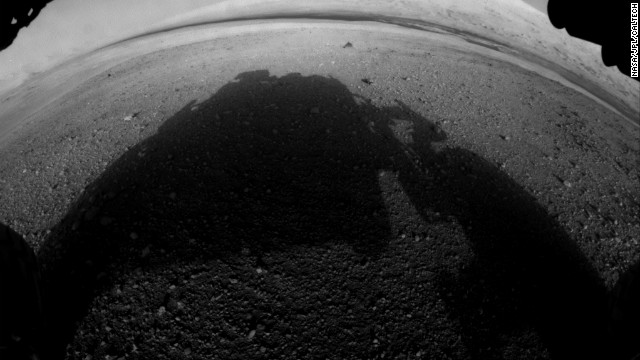
Human's continuous quest to unravel the secrets of the universe is running full throttle with the successful landing of the space rover, Curiosity on Mars. Curiosity's mission is simple, to see whether the red planet has ever supported life, even microbial forms. The news of its landing generated great excitement all over the web, challenging the popularity of even the olympic games. CNN asks whether Curiosity will finally open up martian frontier.

One of the first images captured by Curiosity. Source: CNN.com
What was most interesting to note, however are reports that among the many NASA engineers and scientists, was a Ghanaian,  Dr Ashitey Trebi-Ollennu. 

Dr Trebi-Ollenu Source: http://www-robotics.jpl.nasa.gov
  • Place of Birth: Accra, Ghana
  • Education: B.Eng. in Avionics, University of London, 1991; Ph.D. in Control Systems Engineering, Cranfield University, U.K., 1996.
  • Profession: Multi-disciplinary Engineer
  • Research Interests: Planetary Rovers, Adjustable Autonomy, Mechatronics, System of Systems, Manipulation. Planetary Rover Operations, Multiple Mobile Robots, Reconfigurable Robots, Man-machine Interaction.
  • Other activities: Motivational Talks, Robotics Workshops
A look at Dr Trebi-Ollenu's page at the Jet Propulsion Lab (JPL) website reveals his membership of the Mars Exploration Rover Operations Team. He was a member of both Spirit and Opportunity teams. What is not clear as of now is his direct involvement in Curiosity. This news is very inspiring, to say the least. Dr Trebi-Ollenu's is a great example for young Ghanaian science students. Another notable Ghanaian scientist doing great work with the US National Aeronautics and Space Administration (NASA) is Dr Ave Kludze.

Wednesday, 21 September 2011

What if Kwame Nkrumah Used Social Media?

The story of Ghana's first president, Kwame Nkrumah, continues to draw many passions years after his overthrow and death. Ghana is celebrating a holiday in his honour today and members of the Blogging Ghana community, which I belong to, are writing series of posts in his memory. Last two years, my post was on what Nkrumah's vision would have been if he was still alive, today I'm wondering how Kwame Nkrumah would use social media if he had access to these tools in his time.Would he have used these tools at all?

Kwame Nkrumah, a true African visionary, progressive and political organiser, would have easily identified the networking capabilities of social networks and deployed them in his day-to-day communications. In his day Kwame Nkrumah always found time to meditate and write. Perhaps he would have been glad to share his thoughts with the whole world through blogs. In addition, I think the president would have equally be won over by the 140-character awesomeness of Twitter to send short snippets of his everyday life to the whole world. Twitter might therefore be his social media of choice.

His possible handles might be @KwameNkrumah, @Osagyefo @Nkrumah. I can't imagine a geeky Nkrumah, so he'd probably use one of the foregoing.


Some of Nkrumah's coveted quotes likely could have emerged first as tweets, with some carefully selected hashtags in attendance:

The independence of Ghana is meaningless unless it is linked up with the total liberation of the African continent #Freedom #AfricaMustUnite #Africa
We cannot afford to sit still and be submissive onlookers of technological change #Sci4D #Technology
We face neither east nor west, we face forward #NonAlignment #SelfDeterminism #TotalIndependece
Nkrumah's work was known to have been inspired by the likes of Marcus Garvey, Nnamdi Azikwe, Mahatma Ghandi and W.E.B Du Bois. He'd probably have retweeted them copiously:

RT @Garvey There shall be no solution to this race problem until you, yourselves, strike the blow for liberty.


RT @Zik you talk I listen, you listen I talk>>> Great lesson, sir.  #debate #understanding


RT @Ghandi Non-violence is the greatest force at the disposal of mankind. It is mightier than the mightiest weapon of destruction devised by the ingenuity of man.
RT @WEBDubois: Believe in life! Always human beings will live and progress to greater, broader, and fuller life.
I won't be surprised if he sent out a few thoughts running through his mind, as we often encounter in social media circles. 
On the eve of independence: Feeling a bit nervous. I can't believe what we fought for has been won #GhanaisFree #Indece #6Mar57cc: @Gbedemah @Botsio @Busia


When Akosombo Dam was built: I can't wait to inaugurate this dam. The power generated from this facility will propel our industrialisation and development efforts.


Or when he was overthrown: I can't believe my people have deserted me. Ghana and Africa are in trouble. :(.
And many would have retweeted. Happy holidays!