Showing posts with label Research. Show all posts

Sunday, 26 March 2017

NASA Scientist Dr Trebi-Ollenu Addresses Ghana Academy of Sciences on the Importance of Space Technology

Ghana's Dr Ashitey Trebi-Ollennu from NASA-JPL will be presenting a lecture at the Ghana Academy of Arts and Sciences on the topic “Space Technology Unleashing A Wave of Disruptive New Technologies – To Post-Scarcity Economy”. Going by this title, the lecture promises to unveil deep insights that would be relevant to young people, businesses and policy makers.
The lecture will focus on current and future trends in information technology, explain the exponential growth in technology and present ways that the youth of Ghana can participate in this life-changing disruptive technologies — self-driving cars, genetic editing and artificial intelligence.

Dr Trebi-Ollenu would also address the difficult challenges facing governments today. Special emphasis would be placed on how to enable and channel the 'transformative forces of technological innovation' to maximize the benefits to current and future generations. Suggestions would be made as to how governments can reform institutional structures to be a lot more open to self-disruption as relative power shifts from centralized forces to the unprecedented empowerment of individuals due to the exponential growth of information enabled technologies.

It is refreshing that Dr Trebi-Ollenu is championing this critical discourse at this particular point in time. Advances in modern technology is gradually lowering barriers to entry in various spheres of science and technology research and innovation. This empowers individuals, small organisations, and communities to be able to access tools to be able to solve everyday problems and create businesses, resulting in significant socio-economic gains across board. 

Thursday, 23 April 2015

Junior Camp Internship Programme to Train Ghanaian High School Graduates


GhanaThink Foundation through its Junior Camp Internship Programme (JCIP) will provide hands-on training and practical work experience to ten lucky senior high school graduates. This pilot programme is scheduled to run from June to August, and builds upon the gains of the Junior Camp initiative launched about two years ago at Keta Senior High Technical School.
The training component will last for two weeks; it consists of four thematic areas: learning & research, communication, leadership & ethics, and entrepreneurship. The programme will then dovetail into the internship proper, which features organisations from different industries. The idea is to match trainees with their hopefully "best fit" organisations. This will allow interns to work on projects they are interested in and learn in the process.


The overall aim of JCIP is to expose participants to a wide range of information, skills, and possibilities so as to build their confidence to face their next line of pursuits. A JCIP alumnus should excel at academic studies in the university, be competent and innovative in a work environment, and lead causes of great social benefit. Above everything, graduates of the programme would develop an insatiable hunger for learning and problem-solving, that will drive their everyday activities.

If you are a final year student in a senior high school, or know someone who may be qualified and interested, kindly visit the application form and be part of this great journey. Application closes on 1st May.

Quick Links

Wednesday, 29 October 2014

BarCamp Ho and the Quest for Scientific and Entrepreneurial Thinking in Ghana #bcho

Mentoring session ongoing at BarCamp Ho 2014
Last Saturday, 25th October, I joined other change makers at the University of Health and Allied Sciences for the fourth BarCamp Ho. This was my first barcamp in over a year, so I was really excited to have been part of the event. Here are Storify highlights of what transpired. 


After an initial hesitation, I accepted to 'mentor' some attendees (many of them university or senior high school students) on "education and research", drawing on experiences in science education and postgraduate studies. Upon reflection, since many of the attendees asked the same questions, perhaps, a breakout session on the topic would have been more appropriate. Also, it would have been nice to pick everyone's brain on what can be done to improve the quality of research in Ghana, and to increase its role in policy making. This is very important since science provides tools to fix our day-to-day challenges. A more robust research regime in West Africa would see regional challenges such as ebola, small arms, and energy shortage, handled with greater efficiency than is currently done.

The above submission ties in well with the overall theme of this year's BarCamp Ho: "re-educating ourselves for the new entrepreneurial world", although not immediately apparent. Most of the day's discussions centred on creating business ventures and new instructional/coaching models to raise entrepreneurial champions. While these propositions are rightly in place, it is equally important to extend our conception of entrepreneurial thought to disrupting education and advancing scientific research. Innovation on these frontiers do not only require increased scientific knowledge but also technical aptitude to analyse society's problems and to design and implement solutions to tackle them. Clearly, there is an urgent need to liaise with government, businesses, and the larger society to adopt research as a critical tool for development. The achievement of this feat requires entrepreneurial acumen on a scale similar to what pertains in the business context. Our long-term challenge, therefore, is to create educational opportunities that would enhance the inculcation of critical skills among learners at various educational levels. In the short-term, government must invest more in science education and research. The current situation where less than 0.5% of GDP is allocated to science and technology in Ghana is not only shocking but shameful.
Re-educating ourselves for the new entrepreneurial world requires raising leaders in politics, business and communication, to create revenue-generating projects and to position our country in a favourable light in the global milieu. Just as important is the task to increase the quality of science education and the level of scientific thinking in the general population. We need to build the right environment for scientific research that would lead to inventions and innovations. Also, we need to encourage a maker culture through collaborations between our universities, research institutes and informal makers. I am sure someone said this at the barcamp: "what are we going to market when we do not produce much?"

Monday, 7 April 2014

The Citizen Science Approach to Research: Report from GW4 Workshop, Bath

Source: thinkprogress.org
The idea of harnessing the collective or community input for a project is quite appealing to my African mind. Grassroots involvement fosters group ownership and often leads to better results. Movements such as GhanaThink, BloggingGhana and Enactus ride on the numbers and efforts of its members. When applied to science, public participation aids data collection and organisation, research design, and facilitates greater understanding of scientific phenomena. The active involvement of volunteers or "lay people" in the scientific enterprise, "citizen science", is a fast-growing paradigm in the scientific community and has the same essence as open source, open data and civic participation movements. It has wide applications ranging from social science research, through ecological studies, to unravelling the mysteries of the wider universe. I recently had the fortune to be part of a citizen science workshop organised by the United Kingdom's GW4 Universities at the Bath Royal Literary and Scientific Institution, (BRLSI).
We were welcomed by Dr Helen Featherstone of University of Exeter who gave a brief intro of the day's activities. Dr Robert Simpson from University of Oxford, in the first presentation, gave an overview for the need and benefits of citizen science, drawing examples from the Zooniverse project.
He made an interesting point on validating crowdsource data- data contributed by the most accurate and least accurate volunteers are equally important because of the consistency. Thus you can tell whether the data coming in is accurate or inaccurate.

Dr Erinma Ochu from the University of Manchester then explored the topic from a social science perspective, with examples from the Sunflower Experiment and other projects. Here's a key point she made:
One of my favourite parts of the day was the structured networking session where the participants interacted about how they use citizen science in their work. In short three minute spells, I learnt briefly about projects such as mathMETicsIfOnly, and BodyTrack.

Next was a panel on citizen science case-studies featuring Lisa Austin (Bath, IfOnly), Alexander Todd (Exeter, CliMathNet), Dr Emma Rich (Bath, Citizen Journalism), Dr Jaap Velthuis (Bristol, HiSparc), and Dr Sarah Perkins (Cardiff, Project Splatter).

Panel discussion on GW4 citizen science projects
After the round-table, we broke for lunch amidst networking, followed by the breakout sessions. The breakouts focused on recruiting citizen scientists, methodological approaches and ethics. I was in the methodological approaches/ethics group and some of the issues raised include data ownership, blurring the line between academic and activist, limitations of institutional review processes, and citizen science governance.

Some useful technological and web resources for citizen science researchers were also shared among the group. Some of the less popular ones include Amazon Web Services (AWS), Storify, University Wiki pages, Open Street Map, Google tools (Maps, Apps, etc), Carto DB (for visualisation), Ushahidi (for crowdmapping) and Github (for open source code). 

I learnt a lot from what researchers are doing in the GW4 universities and other institutions. More than that, I enjoyed the brilliant opportunity to interact with the brains behind some really interesting citizen science projects. Hopefully we can do more with the larger public to piece together the puzzle that is life and derive better solutions for our pressing problems. Meanwhile, the conversation continues on Twitter via #GW4CS.
Friday, 17 January 2014

MISE Mathematics Tournament 2014


MISE Foundation is currently accepting application from 11-17 year old students in Ghana for their 2014 mathematics tournament.
The tournament is an international mathematics contest designed to challenge students beyond the normal school curriculum and to help identify gifted young mathematicians for further development... Ultimately the best students will represent Ghana at the international event the following year.
Unlike other competitions, this contest comes with training opportunities for the participants. MISE also has an international mathematics summer camp that gives the opportunity for motivated students to engage world class mathematicians and technologists from diverse backgrounds.

According to Joel Dogoe of MISE:
any student interested in math can apply but our selection programme will look for the best out of all applicants. We de-emphasise the competition bit of the programme when we identify students for the training programme. So far our alumni are a testimony of the programme's success and we are still working hard to identify more of such talents here in Ghana.
I think the MISE initiative is a brilliant way to engage young students in mathematics. Any student passionate about developing a career in the mathematical sciences or merely intent on building their analytical skills should give this a shot!

In Memoriam: Professor Marian Ewurama Addy

RIP Prof Marian Ewurama Addy. (Pic taken from ghanaweb.com)
I first learnt of Professor Ewurama Addy's passing on through a friend's wall on Facebook. I quickly googled around to find the news, and was totally disheartened to find that she was indeed gone.

Most Ghanaians, especially those interested in the sciences, will remember her as the quiz mistress of the popular National Science and Maths Quiz (NSMQ) programme on TV. In fact, my first encounter with her was through that medium back in the day. I would say NSMQ was likely one of the factors that swayed me to take the scientific path, as I was interested in so many different subjects in Junior Secondary School. 

In the biochemistry department at University of Ghana, Legon, she was highly respected by both staff and students. I was always curious to have a taste of the substance behind the aura. I got to know Prof Addy better in my final year when she taught us BCHM 409, "biochemistry of hormones." The class was interesting and engaging and she always drew on her wide experiences in teaching and research to illustrate key points (stuff about cyclic AMP, G-proteins and cholesterol). I dozed off a few times during her early morning lectures, and thought she didn't notice.Well on the last but one day of the course, she finally asked why I was often sleepy and promised giving me a special T-shirt if I don't sleep off in her last class!

She encouraged her students to pursue graduate studies, especially if we wanted to become biochemists. She was right. You can't really call yourself a biochemistry without at least a masters degree in the field. Since I left university I've been involved in research, technology and education. Although I'm not centrally located in biochemistry any more, the training received from the department, from people like Prof, is helping me to hold my own in the world.

The last time I met her was back in 2009 at a public forum for Sir Tim Berners-Lee, inventor of the worldwide web at AITI-KACE. During that time, she was working on the Anglican University of Technology project. She will always be remembered as a great scientist, teacher, science champion, quiz mistress and role model.

Also read this beautiful tribute to her at Levers in Heels, celebrating what she means for women in science. What do you think is Prof Addy's greatest legacy and what should be done to remember her?

Wednesday, 8 August 2012

Ghanaian Scientist Part of Curiosity Mars Exploration Team?

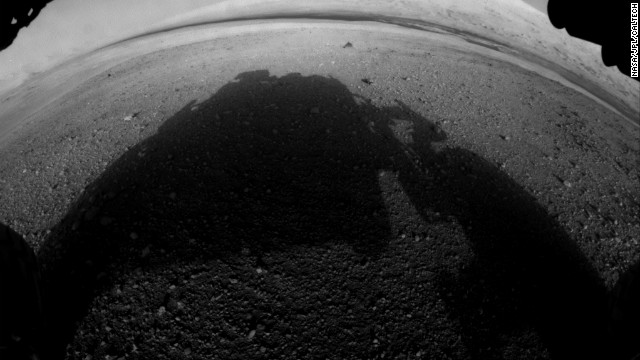
Human's continuous quest to unravel the secrets of the universe is running full throttle with the successful landing of the space rover, Curiosity on Mars. Curiosity's mission is simple, to see whether the red planet has ever supported life, even microbial forms. The news of its landing generated great excitement all over the web, challenging the popularity of even the olympic games. CNN asks whether Curiosity will finally open up martian frontier.

One of the first images captured by Curiosity. Source: CNN.com
What was most interesting to note, however are reports that among the many NASA engineers and scientists, was a Ghanaian,  Dr Ashitey Trebi-Ollennu. 

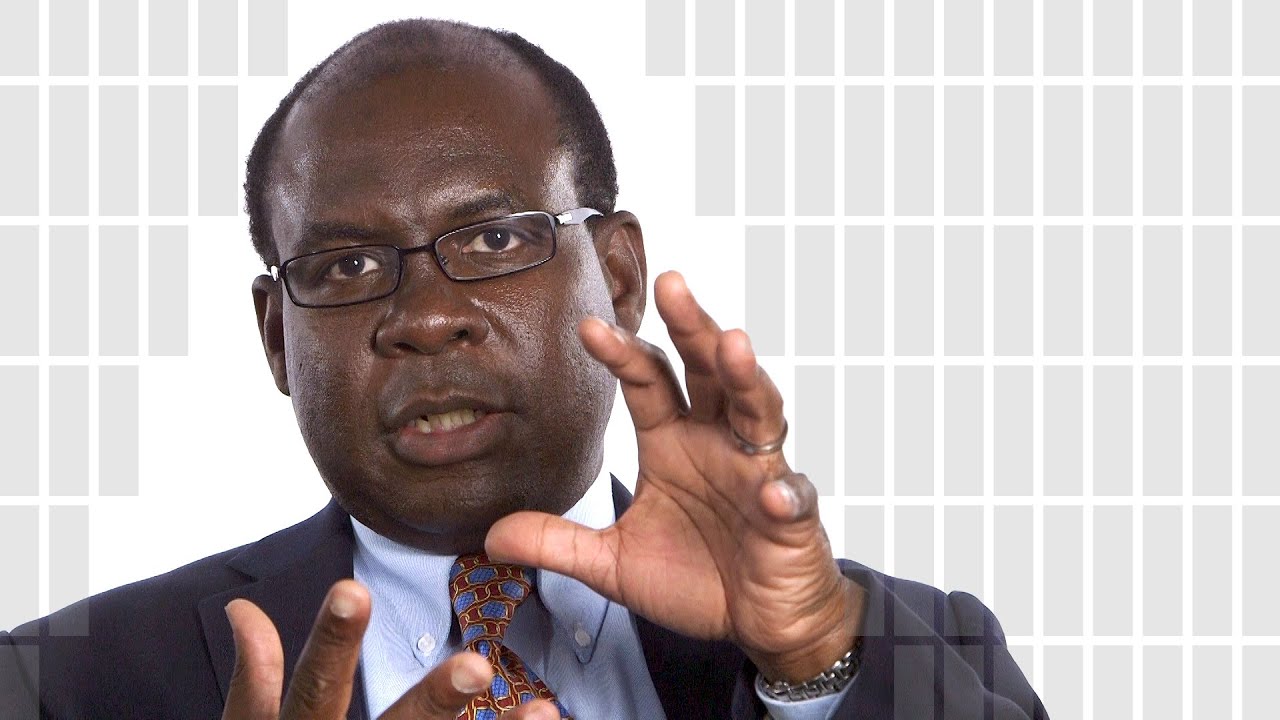
Dr Trebi-Ollenu Source: http://www-robotics.jpl.nasa.gov
  • Place of Birth: Accra, Ghana
  • Education: B.Eng. in Avionics, University of London, 1991; Ph.D. in Control Systems Engineering, Cranfield University, U.K., 1996.
  • Profession: Multi-disciplinary Engineer
  • Research Interests: Planetary Rovers, Adjustable Autonomy, Mechatronics, System of Systems, Manipulation. Planetary Rover Operations, Multiple Mobile Robots, Reconfigurable Robots, Man-machine Interaction.
  • Other activities: Motivational Talks, Robotics Workshops
A look at Dr Trebi-Ollenu's page at the Jet Propulsion Lab (JPL) website reveals his membership of the Mars Exploration Rover Operations Team. He was a member of both Spirit and Opportunity teams. What is not clear as of now is his direct involvement in Curiosity. This news is very inspiring, to say the least. Dr Trebi-Ollenu's is a great example for young Ghanaian science students. Another notable Ghanaian scientist doing great work with the US National Aeronautics and Space Administration (NASA) is Dr Ave Kludze.